
BookableFree cancellation
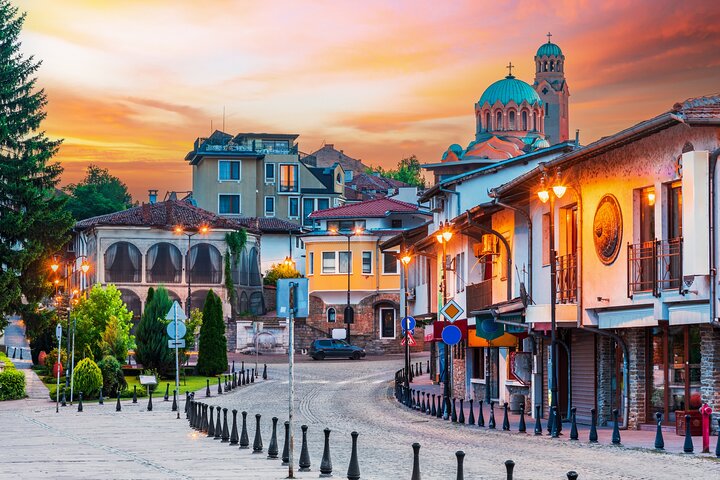
Discover Bulgaria with Dance in Sofia, Bulgaria
4.8(58)
Ratings collected by Viator + Tripadvisor
From $26.071 hr
View experience
Compare full details and current availability before you choose.
Cookie preferences
Natifly uses necessary browser storage for core features such as sign-in, security, private account workflows, and remembering this choice. Optional Google Analytics cookies are used only if you allow analytics.
Supports essential site, security, account, booking, and consent-preference functions. These are not switched on or off by the analytics choice.
Measures sanitized page categories and a small allowlist of product interactions. The Google Analytics tag stays blocked until you allow analytics.
Google advertising consent signals remain denied by this control. Analytics does not determine qualified creator views or creator earnings. Read the Cookie Notice and Privacy Notice.

Bulgaria
Image: Pudelek (Marcin Szala) · CC BY-SA 3.0 · Wikimedia Commons · Source
Plan your travel
Keep destinations you are considering together in a private trip.
City overview
Sofia layers Roman archaeology, Orthodox landmarks, Ottoman traces, twentieth-century civic architecture and a lively contemporary center against the backdrop of Vitosha Mountain. The historic core is compact enough to explore largely on foot, while parks, residential districts and mountain access add a broader sense of place. A first visit works well when churches and museums are balanced with markets, green space and unhurried street-level time.
Best time to visit
Spring and early autumn are generally comfortable for long city walks, while summer can be hot and winter can bring snow and icy pavements. Mountain conditions on Vitosha can differ sharply from central Sofia, so check current weather before higher walks.
Currency
EUR
Language
Bulgarian; English is common in many central visitor areas
Bookable experiences
Compare tours, tickets, and activities by photos, ratings, starting prices, duration, cancellation details, and available options before choosing what fits your trip.
Ratings collected by Viator + Tripadvisor
Compare full details and current availability before you choose.
Ratings collected by Viator + Tripadvisor
Compare full details and current availability before you choose.

Ratings collected by Viator + Tripadvisor
Compare full details and current availability before you choose.

Ratings collected by Viator + Tripadvisor
Compare full details and current availability before you choose.

Ratings collected by Viator + Tripadvisor
Compare full details and current availability before you choose.

Ratings collected by Viator + Tripadvisor
Compare full details and current availability before you choose.
See and do
Explore landmarks, museums, viewpoints, markets, parks, and cultural sites. Open any place for practical visit context, nearby experiences, traveler Journeys, flight planning, and Add to Trip.
Cathedral & Architecture
Alexander Nevsky Cathedral is Sofia's most recognizable Orthodox landmark, with a large domed silhouette and richly decorated interior near the eastern edge of the historic center. It is an active religious site as well as a major piece of Bulgarian national architecture.
Image: Pudelek (Marcin Szala) · CC BY-SA 3.0 · Wikimedia Commons · Source
View attraction →Park & Outdoors
Borisova Gradina is Sofia's largest historic central park, with wooded paths, lawns, sports areas and long walking routes east of the center. It is a useful low-pressure counterpoint to museums and dense sightseeing, especially in mild weather.
Image: Pudelek (Marcin Szala) · CC BY-SA 3.0 · Wikimedia Commons · Source
View attraction →Museum & Archaeology
The National Archaeological Museum occupies a former Ottoman mosque and brings together prehistoric, Thracian, Roman and medieval material from across Bulgaria. It gives useful historical context to the Roman remains visible around central Sofia.
Image: Pudelek (Marcin Szala) · CC BY-SA 3.0 · Wikimedia Commons · Source
View attraction →Urban Walk & City Life
Vitosha Boulevard and the surrounding central streets form one of Sofia's main pedestrian and social corridors, linking cafés, shops, side streets and views toward Vitosha Mountain. Walking beyond the busiest blocks reveals a more everyday urban rhythm.
Image: Pudelek (Marcin Szala) · CC BY-SA 3.0 · Wikimedia Commons · Source
View attraction →Market & Food
Sofia's Women's Market, known locally as Zhenski Pazar, combines produce stalls, spice shops, bakeries and small businesses in a long-standing commercial district north-west of the core. Visit during active daytime hours and explore the surrounding streets respectfully.
Image: Pudelek (Marcin Szala) · CC BY-SA 3.0 · Wikimedia Commons · Source
View attraction →Practical planning
Planning
Two to three days gives enough time for the cathedral and central archaeological layer, one major museum, a market or café district and a slower park or Vitosha-facing afternoon. Keep arrival day lighter than the rest of the trip so transport delays, weather and check-in do not disrupt a must-see reservation.
Culture
Dress and behave respectfully inside active Orthodox churches, keep voices low during services and ask before photographing people. On busy pedestrian streets, treat cafés and markets as everyday local spaces rather than staged visitor attractions.
Money
Bulgaria adopted the euro in 2026. Cards are widely accepted in central Sofia, while a modest cash backup remains useful for small purchases, markets and occasional transport or kiosk payments.
Planning
Group Alexander Nevsky Cathedral, the archaeological center and nearby museums into one walk, then give Vitosha Boulevard, Borisova Gradina or a mountain outing a separate block so the day is not dominated by backtracking. Most outdoor landmarks can remain flexible. Check current official hours and any ticket requirements for museums, cathedral interiors, special exhibitions and Vitosha lifts or organized mountain activities before fixing a timed day.
Transport
The metro, trams, buses and walking cover the main visitor areas efficiently. Use the metro for airport and cross-city connections, then walk the compact center rather than relying on short taxi journeys through traffic.
Common questions
Most outdoor landmarks can remain flexible. Check current official hours and any ticket requirements for museums, cathedral interiors, special exhibitions and Vitosha lifts or organized mountain activities before fixing a timed day.
Bulgaria adopted the euro in 2026. Cards are widely accepted in central Sofia, while a modest cash backup remains useful for small purchases, markets and occasional transport or kiosk payments.
Two to three days gives enough time for the cathedral and central archaeological layer, one major museum, a market or café district and a slower park or Vitosha-facing afternoon.
The metro, trams, buses and walking cover the main visitor areas efficiently. Use the metro for airport and cross-city connections, then walk the compact center rather than relying on short taxi journeys through traffic.
Spring and early autumn are generally comfortable for long city walks, while summer can be hot and winter can bring snow and icy pavements. Mountain conditions on Vitosha can differ sharply from central Sofia, so check current weather before higher walks.